
Building Beyond Housing: Robert Byers on Indigenous Leadership, the Caucus, and the Future of FIBI
10 Sep 2026
Vena Beckford, Director of Indigenous Housing Policy and Programs
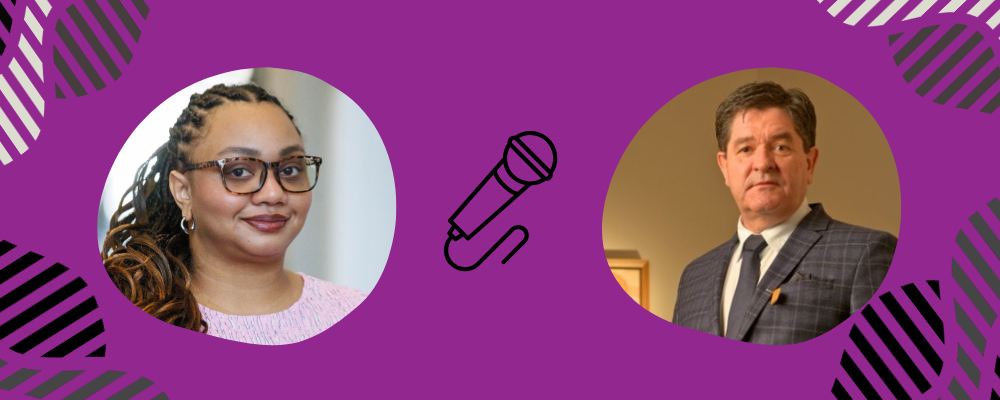
As part of our ongoing series highlighting Indigenous housing leaders from across the country, I recently had the opportunity to sit down with Robert Byers, President and CEO of Namerind Housing Corporation and a longstanding member of CHRA’s Indigenous Caucus Working Group.
Robert has spent decades working to expand what Indigenous-led housing can look like, from rethinking Namerind’s approach to affordable housing and economic development to helping build the Indigenous Caucus into the national voice it is today. As one of the leaders involved in the Caucus from its earliest days, Robert brings a unique perspective on how far the sector has come, and what still needs to happen.
Our conversation explored his journey with Namerind, the early days and evolution of CHRA’s Indigenous Caucus, the importance of For Indigenous, By Indigenous approaches, and why relationships remain central to both housing and leadership.
Robert, thanks for taking the time to chat with us. You've spent a significant part of your career at Namerind. What originally brought you into Indigenous housing, and what has kept you committed to this work over the years?
What brought me into it was not only a job opportunity, but the opportunity to work with Indigenous people, for Indigenous people.
I never totally understood why we always went to government for a handout so that we could do something. I grew up depending on government funding, and I knew it was no way to live. When Namerind’s subsidies began ending, I saw an opportunity to change the way we did business as Indigenous people.
We still needed affordable housing, so we started thinking differently about how we invested. We knew we couldn’t continue to rely only on single detached homes spread throughout the city. Some of our houses were also beyond repair, and instead of continuing to invest in properties where it didn’t make sense, we repurposed that capital.
Under your leadership, Namerind has grown beyond its roots as a housing provider, bringing economic development and social enterprise into the picture as well. What led you to think differently about what an Indigenous housing organization could be?
We knew that if we were going to survive and prosper, we had to invest in things beyond housing. At one time, we were receiving more than $2 million a year in subsidies, and we knew we had to find a way to replace that.
We reached out to contractors and encouraged them to start their own companies. We committed enough work to keep them going for 10 years, with the idea that by then they would be well established and able to choose whether to continue working with us, work with others, or both.
We also invested in a warehouse and a mall, where our anchor tenant was a community clinic with doctors and nurse practitioners. When we saw there was a large patient base but no pharmacy, we worked to open our own.
At first, it was a tough sell. People wondered what an Indigenous-led affordable housing provider had to do with a pharmacy. Once they understood the bigger plan, they became strong supporters.
You've often talked about housing as being about more than putting a roof over someone's head. After all these years, what have the people and communities you've worked with taught you about what housing can make possible?
When we started renovating our homes, it was important to improve the quality of the materials we used. We wanted people to have homes they could be proud of.
We even held yard contests to encourage tenants to take care of their homes. We wanted to break the cycle of kids saying, “Let’s go to your place after school.” We wanted the kids living in our homes to be able to say, “Let’s go to MY place.”
We wanted everyone in the family, parents and children, to feel proud of where they lived. We used to see properties get badly damaged, and we don’t see that in the same way anymore. Right now, our vacancy rate is only 3%, the lowest it has ever been at Namerind.
It’s an ongoing process, but it works. People need to know that people care.
You've been involved with CHRA's Indigenous Caucus almost from the beginning, including helping establish the first Caucus gathering and later serving as Chair. Take us back to those early days. What was the Caucus trying to accomplish, and what did you hope it could become?
Former CHRA President Phil Brown and I met at a world Indigenous housing conference in Vancouver, and we talked about forming an Indigenous Caucus. The following year, Phil organized a lunch to see whether people would be interested. He ordered lunch for 40 people, and somewhere between 80 and 100 showed up.
We knew then that this was important.
Because of my involvement in getting the Caucus off the ground, I was later approached about putting my name forward for the CHRA Board and chairing the Indigenous Caucus Working Group. After my first Caucus meeting, though, I remember thinking, “Who am I to be the Indian expert for Indigenous folks across Canada?”
So I reached out to Indigenous housing providers whose work I respected and who I knew wanted to move the sector forward. That’s how we came up with the Caucus Working Group.
You've now watched the Caucus evolve for more than a decade. When you look at where it started and where it is today, what changes or accomplishments stand out most?
We’ve evolved to a place where we now have regional and provincial representation. We authored the For Indigenous, By Indigenous paper, and today the federal government has adopted that language.
From that advocacy came NICHI. The Caucus Working Group lobbied for it, and it was Caucus members who kept pushing for a separate Indigenous-led approach.
One of the major developments during that evolution was the push for a For-Indigenous, By-Indigenous approach to urban, rural and northern housing. What did that advocacy represent to you, and what does culturally appropriate housing mean in practice?
We’ve evolved to a point where our voice is more respected, and I think the Truth and Reconciliation Commission’s 94 Calls to Action have been part of that change.
At Namerind, whether we’re developing strategies around affordable housing, homelessness or our businesses, we think about reconciliation and about being part of the community.
When we talk about housing being “culturally appropriate,” what does that really mean? To me, it is For-Indigenous, By-Indigenous. When an Indigenous person comes into our office and tells us their story, we can relate and understand. They aren’t being judged. Most of us have family members who have gone through something similar.
That understanding matters.
Even after your time as Chair, you've remained an active member of the Indigenous Caucus Working Group. What keeps you involved, and what do you think is important for the next generation of Caucus leaders to carry forward?
We still have so much more to accomplish. It’s not about being included, it’s about being a part of.
Today, we can go into a meeting with a federal housing minister or Secretary of State and be part of the conversation when government is developing housing or homelessness strategies. We are part of those conversations now. It wasn’t like that before.
Namerind has also taken on a broader role in addressing homelessness in Regina. How has working across both housing and homelessness shaped the way you think about relationships and community?
When we first became the Community Entity, we felt that people weren’t necessarily there to support us. It seemed like they were waiting for us to do something wrong. As Indigenous people, we’re used to that. We knew it would be a struggle, but we were ready to meet that challenge.
We also knew communication and relationships were important, and that we had a role in educating the broader community about truth and reconciliation. We brought in one of the Truth and Reconciliation Commissioners to speak to a business group. We also brought in a Chief from a community where hundreds of potential unmarked graves had been identified, so people could better understand why these conversations matter.
Our annual community engagement gathering started with about 60 people. This year, it sold out three months in advance with 350 attendees, including people coming from across Canada.
We continue to talk about the 94 Calls to Action and bring together Elders, social workers and others with important stories to share. Some of those stories are hard-hitting, but sometimes they have to be.
You've been doing this work long enough to see new generations of Indigenous housing professionals enter the sector. What have you learned about leadership that you wish someone had told you earlier in your career?
I got involved in things that weren’t housing, and I asked a lot of questions because I knew that one day someone would ask me. The young people in our office have seen that, and we all understand the importance of relationships and connection.
When we talk about homelessness and our Point-in-Time Count, for example, it’s more than just an event. I don’t even like calling it that. It gives us an opportunity to connect with someone who is experiencing homelessness, and it could be the day we help change the direction of someone’s life.
Young people coming into this work need to understand that building those relationships isn’t quick or easy, but it works.
Finally, after everything you've helped build through Namerind and the Indigenous Caucus, what are you still hoping to see happen in Indigenous housing that would make you feel we've truly moved the needle?
I wish NICHI didn’t have to keep asking for more money. I want to see them become a permanent part of the federal government’s plan for Indigenous housing across Canada, with stable funding because the need has not disappeared.
To me, that’s how we move the needle.
Again, For-Indigenous, By-Indigenous works.
As Robert’s reflections make clear, the growth of Indigenous housing in Canada has been shaped not only by new programs and investments, but by Indigenous leaders and organizations pushing to change the way decisions are made.
From Namerind’s approach to housing and economic development to the growth of CHRA’s Indigenous Caucus and the advancement of For-Indigenous, By-Indigenous solutions, Robert’s career reflects the value of building strong organizations, strong relationships, and a stronger Indigenous voice in housing.
To stay up to date on the work of the Indigenous Caucus and Indigenous housing leaders from across the country, subscribe to the Caucus newsletter.